

National would give Auckland $19.1 million a year from the visitor levy. The mayor wants $27 million.
Auckland Mayor Wayne Brown said the National Party’s plan to hand councils a share of the international visitor levy leaves the city about $8 million a year short.
National announced as a Party policy that it would split the levy, known as the IVL, with councils from 1 July 2027, in place of the bed tax it ruled out in August.
Auckland’s share in the first year is put at $19.1 million.
“This National Party announcement is a step in the right direction, but we are still around $8 million short, and it’s not yet a long-term solution,” the mayor said in a statement.
“The proposed $19.1 million reallocation from the International Visitor Levy is a welcome start, but it falls well short of the $27 million Auckland needs each year for major events and destination marketing.
“But this shows they’re listening.”
He named the ASB Classic, All Blacks tests, State of Origin, SailGP and the Writers Festival as events he said were at risk.
The Council had spent two years asking for a bed tax to pay for the same work.
Under National’s policy the levy would be split three ways.
The Department of Conservation gets $100 million a year and a Tourism Priorities Fund $50 million, with the rest going to councils according to their share of international visitor guest nights.
That leaves about $86 million for councils in the first year, or roughly $385 million over four years.
“Tourism is New Zealand’s second-largest export earner and a key driver of economic growth, jobs and higher incomes,” National’s finance spokesperson Nicola Willis said.
“As visitor numbers recover and continue to grow, the communities hosting those visitors should share more directly in the benefits of tourism success.
“Under National’s policy, every territorial authority that hosts international visitors will receive a share of IVL funding, so they can support responsible growth in tourism in their community.”
Willis said the money would reach councils “around two years earlier than it would with a bed tax”.
The Party has also promised not to lift the levy for at least three years.
An objection has come from inside the coalition, despite a city deal with Auckland to explore bed taxes.
NZ First leader Winston Peters said in August that National’s changed stance was a Party position, not a decision of the Government it leads.
The signed deal with Auckland states that the levies “will be considered by the government in 2027”, he said, and nothing had changed.
“The Government has not considered it yet,” he said.
“If other parties want to campaign on reneging on the deal to even consider the levy that’s up to them.”
“But in NZ First we believe a deal is a deal.”
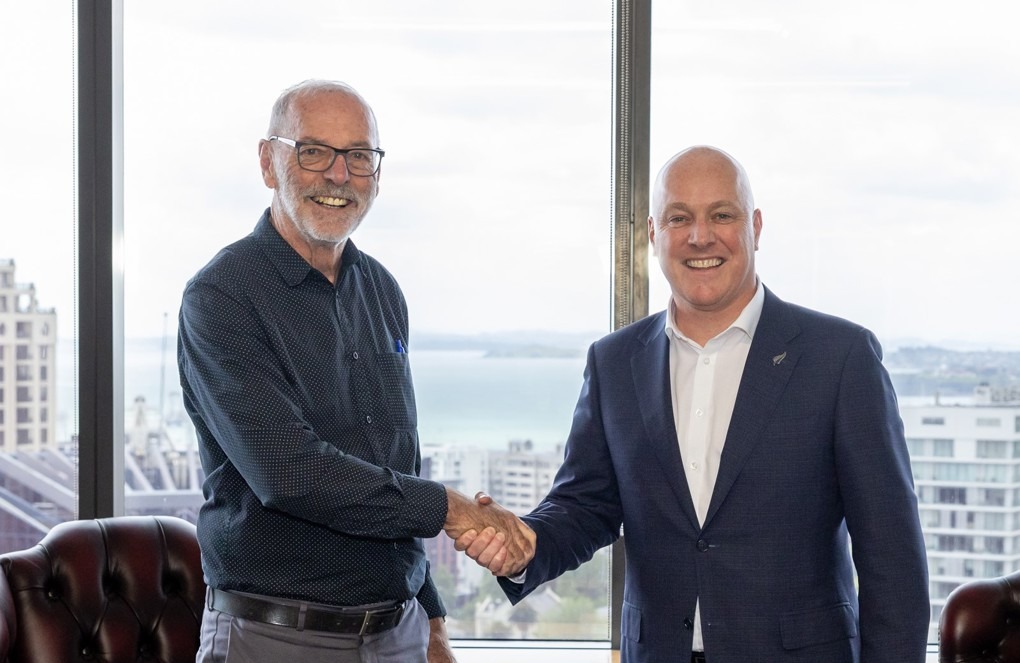
Peters said Luxon had been speaking for the Government when he signed, “and we’re going to make sure the Government keeps its word”.
Willis, who is also Finance Minister, said the levy had been explored and that problems and alternatives had been found.
Under the Auckland Deal, the mayor said, central government is obliged to explore a dedicated bed-night levy alongside local leadership.
He said such a levy is not a tax.
“The bed-night levy is a fair user charge that would mean visitors, rather than Auckland ratepayers, contribute a few dollars towards tourism-related infrastructure and services while they’re here,” he said.
A 2.5 per cent charge would raise the money locally from everyone staying in commercial accommodation, he said, without adding a barrier at the border.
“Governments change, but key industry leads remain,” he said.
“We are actively working with the sector to build an enduring, stable solution that doesn’t depend on Wellington’s annual budget cycles.”
Under the deal, the levies are due to be considered in 2027, by whichever government is in office after 7 November.

