


National has promised Mill Road at two previous elections, and it is still not built
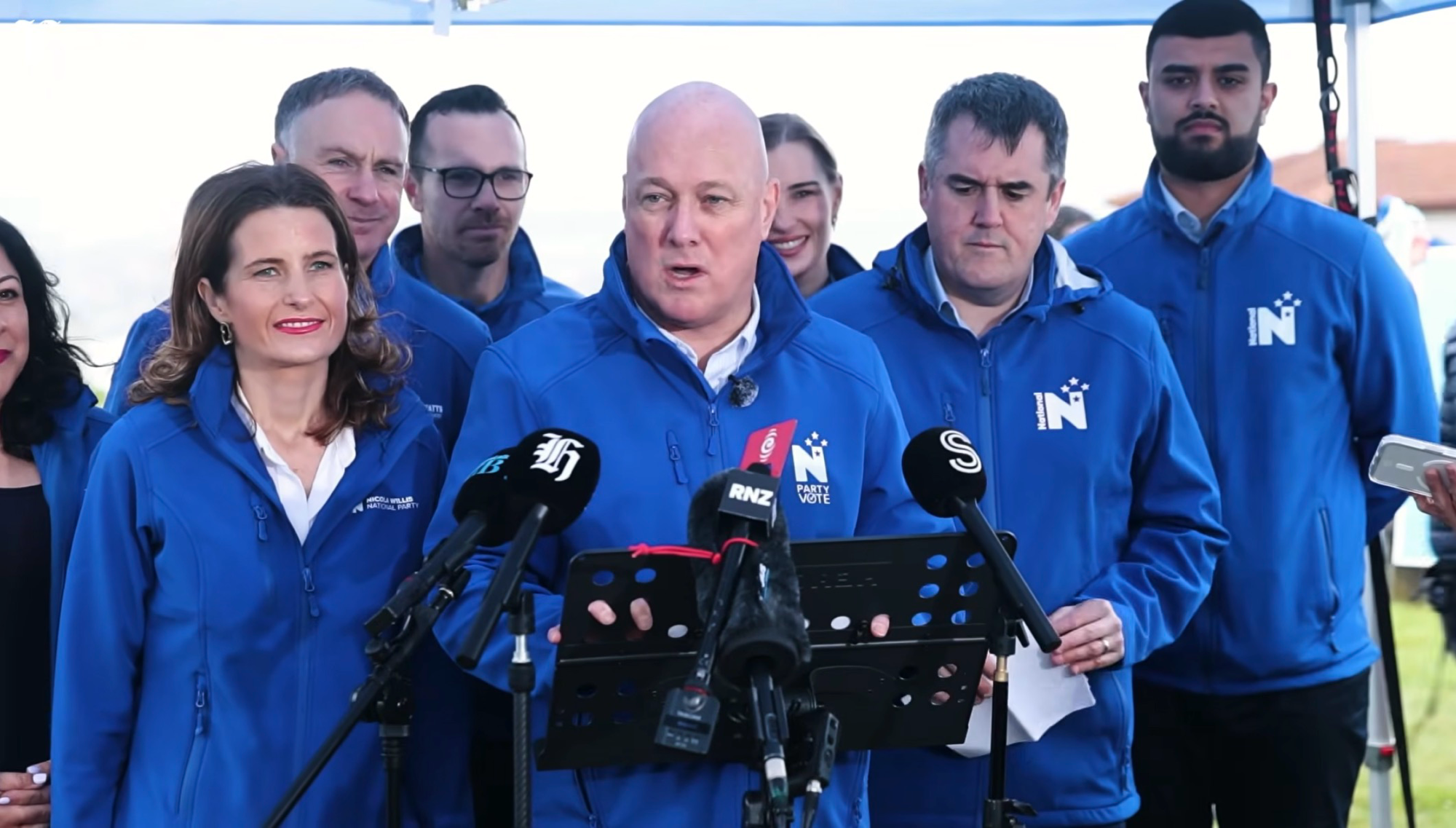
A re-elected National government would start building the first stage of Mill Road in late 2028, Prime Minister Christopher Luxon announced on Sunday.
Stage One would upgrade Redoubt Road, which runs along the southern boundary of the Howick Local Board area, as part of a four-lane route from Manukau to Alfriston.
It is the third election at which National has campaigned on Mill Road, after 2017 and 2023, and the road has not been built.
“After years of debate and discussion about Mill Road, National is getting on with it,” Luxon said.
“Motorists travelling between Drury, Papakura, Manukau are funnelled onto an already congested Southern Motorway,” he said. “So Mill Road will be an absolute game changer.”
Motorists travelling south from Flat Bush have experienced increasing journey times and congested intersections, such as the Murphys Road and Redoubt Road intersection.
NZ Transport Agency (NZTA) figures show traffic on the corridor growing by 4 per cent a year, with peak-hour speeds of 20 to 30km/h.
Transport Minister Chris Bishop said last year that South Auckland was the fastest-growing area of the region, with 120,000 more people expected to move there over the next 30 years.
NZTA says the corridor would provide a more efficient and resilient way to move between Flat Bush, Manukau, Manurewa, Papakura and Drury.
“I know in Takanini when I’ve been door knocking, one of the biggest issues right now is when are we getting Mill Road done,” Takanini MP Rima Nakhle said.
“Not only is it a congestion issue, it’s also a health and safety issue,” Nakhle said. “We’ve got an intersection up the road here that causes so much havoc.”
She called it “a great day for my neighbours across Takanini but also around South and East Auckland”.
National would set aside $1.75 billion in Budget 2028 for Stage One, and $100 million to protect the route for the later stages from Alfriston to Drury.
“After a decade of talk and frankly on again, off again, we’re excited to be getting on with this critical project,” Bishop said.
Once finished, the full corridor would be a four-lane, 21.5km road running alongside State Highway 1 from Manukau to Drury.
NZTA estimates Stage One would cut deaths and serious injuries on the route by more than 60 per cent.
The Mill Road project has had a long history of announcements followed by setbacks, dating back to 2004 when it was being investigated by the then-Manukau City Council.
In 2017 National pledged $955 million to make the corridor a state highway, then lost the election.
Labour’s 2020 upgrade programme promised four lanes from Manukau to Drury, but in 2021 the Labour Government cut that back to safety improvements, saying the full plan could cost up to $3.5 billion.
National’s 2023 transport policy listed Stage One at $1.3 billion, with “expected commencement” in one to three years.
In April 2025 Bishop said construction could begin as early as mid-2026.
Despite that date passing, the project has not yet been consented.
In July this year Bishop said the project could move to construction “as funding becomes available”.
The $1.75 billion now promised is $450 million more than National’s 2023 figure.
Auckland Mayor Wayne Brown told the NZ Herald $1.75 billion was an “idiotic sum to fix three intersections”, and the existing dynamic lane, which changes direction for peak-hour traffic, should be extended instead.
“Building a new four-lane road full of traffic lights isn’t the answer,” he said.
Brown disputed Bishop’s claim that the project had been discussed with him as part of the Auckland deal the Government and the Council signed in April.
“This wasn’t in the Auckland Deal and it’s not in the 30-year plan so National just can’t do that,” he said.
Labour has not said publicly whether it would build Mill Road.
When the Government slowed several of its flagship road projects in July, including the later stages of Mill Road, Labour transport spokesperson Tangi Utikere criticised the move.
“That’s not a transport plan, that’s a wishlist,” he said. “They over-promised, under-budgeted and are now walking back the certainty they sold at the election.”
Utikere said a Labour government would honour projects “where delivery is underway, where contracts are in place, where funding is secured”.
NZTA has until 14 November 2027 to lodge its consent application under the fast-track law, a year before National’s promised start.
Mill Road: the dates
2004: Manukau, Papakura and Franklin councils join a southern transport study that finds Mill Road needs upgrading.
2008 to 2010: Manukau and Papakura councils consult on route options but never adopt a preferred route.
2014: Auckland Transport lodges route plans, with construction due to start in 2017.
2016: Auckland Transport confirms the route for the northern section.
September 2017: National promises $955 million to make the corridor a state highway, and loses the election.
January 2020: Labour’s upgrade programme promises four lanes from Manukau to Drury.
June 2021: Labour cuts the project back to safety improvements, saying the full scope could cost up to $3.5 billion.
July 2023: National’s election policy lists Stage One at $1.3 billion, with “expected commencement” in one to three years.
July 2024: Mill Road is left off the Government’s list of roads to begin within three years.
April 2025: Bishop says construction could begin as early as mid-2026, with faster journeys by 2031.
July 2026: Stage One stays in planning, to proceed “as funding becomes available”.
October 2026: National promises $1.75 billion and a late-2028 start.

