


As the saying goes, success has many fathers, but failure is an orphan.
And so it was at the opening of Auckland’s City Rail Link on Friday last week.
As the crowds lined the rail tunnel at the opening ceremony, and in the days following, one man stood out as the true father of New Zealand’s largest transport investment: former Auckland mayor Len Brown.
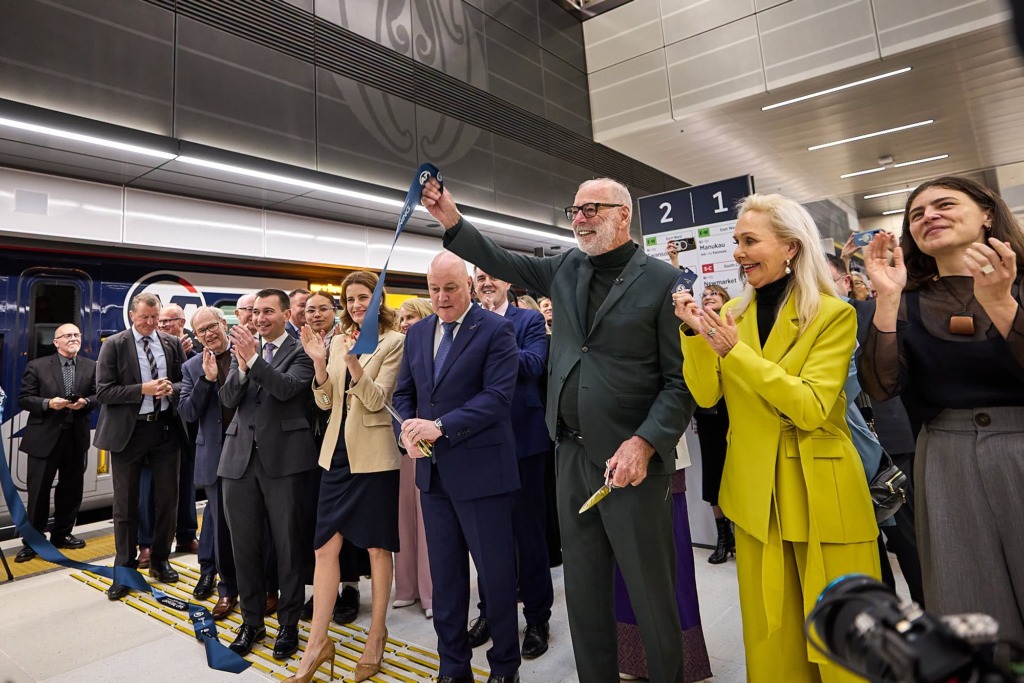
Brown stood in the background of the official opening ceremony, as politicians of all stripes lined up for photos, ribbon-cutting scissors in hand, selfie photo smiles on display.
The rail link was formally opened by current Auckland Mayor Wayne Brown and Prime Minister Christopher Luxon.
“The City Rail Link is a transformational investment for Auckland,” Wayne Brown said. “It’s a game changer for our city that will benefit generations to come.”
He encouraged Aucklanders to “get on board, literally, and make the most of this significant investment in our city’s future”.
Transport Minister Chris Bishop, who spoke at the ceremony, had the good grace to concede that the people who got the project started were not the ones cutting the ribbon.
“There have been Ministers of Transport before me, governments and councils before me that started this project,” Bishop said.
“I am intensely aware that I am just the current guy holding the job.”
In the weeks leading up to the rail link’s opening, Len Brown has been accorded the accolades of someone who had the vision and foresight to press the city and the nation’s leaders into backing the project during his time as mayor, from 2010 to 2016.
As mayor he put years’ worth of advocacy hours into convincing the government of the day, led by National’s John Key, to commit to the tunnels.
That government agreed to help pay for them in June 2013.
Brown took the opportunity to speak to gathered supporters after the opening.
“Having sat through the ceremony yesterday, I’m sure I can contribute something positive to the occasion,” he told them.
What followed was not about the tunnels.
It was about the people he says put him up to building them.
The case for the link, Brown said, had never come out of the analysis, but from the people of Auckland.
“While I totally got the theory, did all the analysis, took all the best advice … I always was remembering the quiet people sitting in the back rows of all of those hundreds of public meetings, and the tens of thousands of doorsteps that I went over to talk to the people,” he said.
Those people were sitting in a gridlocked city, he said, and they had had enough of it.
“They were mad,” Brown said. “They were bloody mad.”
Their message, as he told it, was blunt.
“Man, for God’s sake, give us a choice,” he said. “You become the bloody super city, man. Do this super thing.”
He was elected on it, and he says the council elected with him was behind it.
“So they sent me in with a council who were totally supportive of it,” Brown said. “It was the number one issue.”
The job after that, he said, was delivering the message time after time.
“I sure as hell found out that you didn’t have to mention it ten times to actually ensure the people got the message,” he said. “I needed to mention it a hundred times.”
For a man being handed the credit, he was careful not to take it.
“I always saw myself as a conductor, because it was a team effort,” Brown said.
“On this day, it is their success,” he said, “but mostly it’s for the future of those who are not yet born.”

