


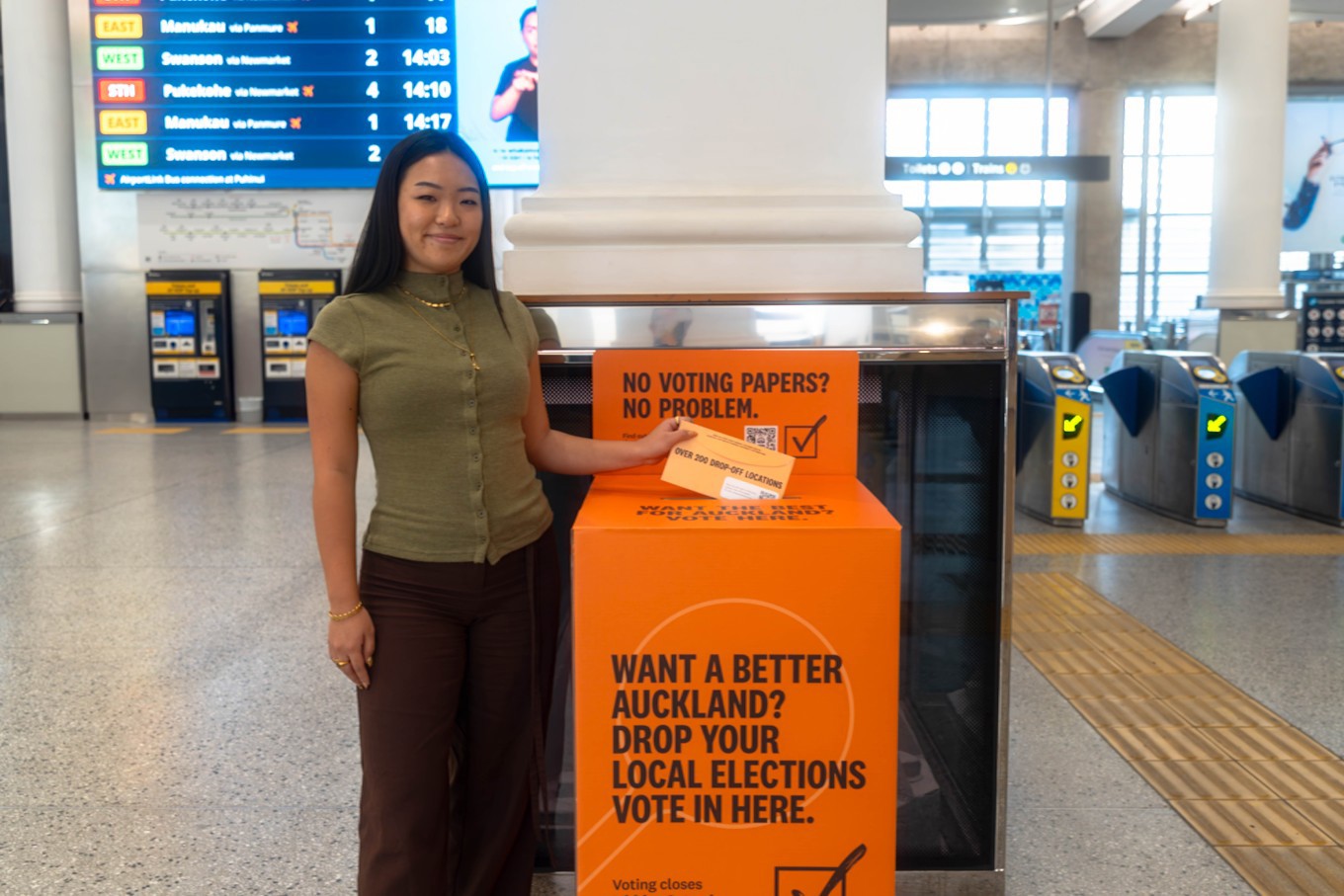
Postal voting is “not sustainable long-term” and booth voting should return in time for the 2028 local elections, the Howick Local Board says.
In feedback to Auckland Council’s submission to the Justice Committee’s inquiry into the 2025 local elections, the Board set out a detailed reform position at its 26 February meeting.
It resolved that it “strongly support[s] the introduction of booth voting, as provided for in parliamentary elections”, and called for “an urgent and immediate shift away from postal voting to booth voting in time for the 2028 local elections”.
The call echoes a wider push from Local Government New Zealand, whose Electoral Reform Working Group recommended in a 2025 report that postal voting be replaced with booth voting in time for the 2028 local elections.
The group’s chair, Nelson Mayor Nick Smith, said in-person polling booth voting “offers the best opportunity to ensure the future integrity of our voting system”.
“It should be a nationally consistent system that’s as close an experience for the voter as possible to parliamentary elections,” he said, describing postal voting as “increasingly untenable” as postal volumes collapsed.
Sole reliance on postal voting was “not sustainable long-term”, the Board said, pointing to delivery delays, reliability concerns, and the risk that ballots “may be lost, damaged, misdirected, or intercepted”.
It cited “the alleged interference with voting papers in the Papatoetoe subdivision” as an example of the postal system’s vulnerability.
The Board also noted that 22 per cent of people who told a post-election survey they did not vote had in fact filled in their voting document but never lodged it, saying they forgot or missed the deadline.
Among its other recommendations, the Board called for the local government electoral term to be extended to four years, a change the LGNZ group also backed.
It also backed shifting the administration of local elections to the Electoral Commission, including using the Commission’s trademarked “Orange Man” in election marketing.
In the meantime, it supported a long-term, incremental move toward digital or online voting, with safeguards for equity of access.
The Board recommended stronger accountability for candidates, campaign groups and individuals who deliberately interfere with voting, again referencing the Papatoetoe incident.
The recommendations went well beyond what staff had put to the Board, which was a brief, open-ended list of topics to comment on.
The feedback was moved by member Adele White and seconded by member Katrina Bungard, and carried.
The Board acknowledged “the inherent complexity of elected representatives providing feedback on the system that elects them”, framing its comments around democratic legitimacy, accessibility, administrative integrity and public trust.
Its feedback will inform Auckland Council’s own submission to the inquiry.

