

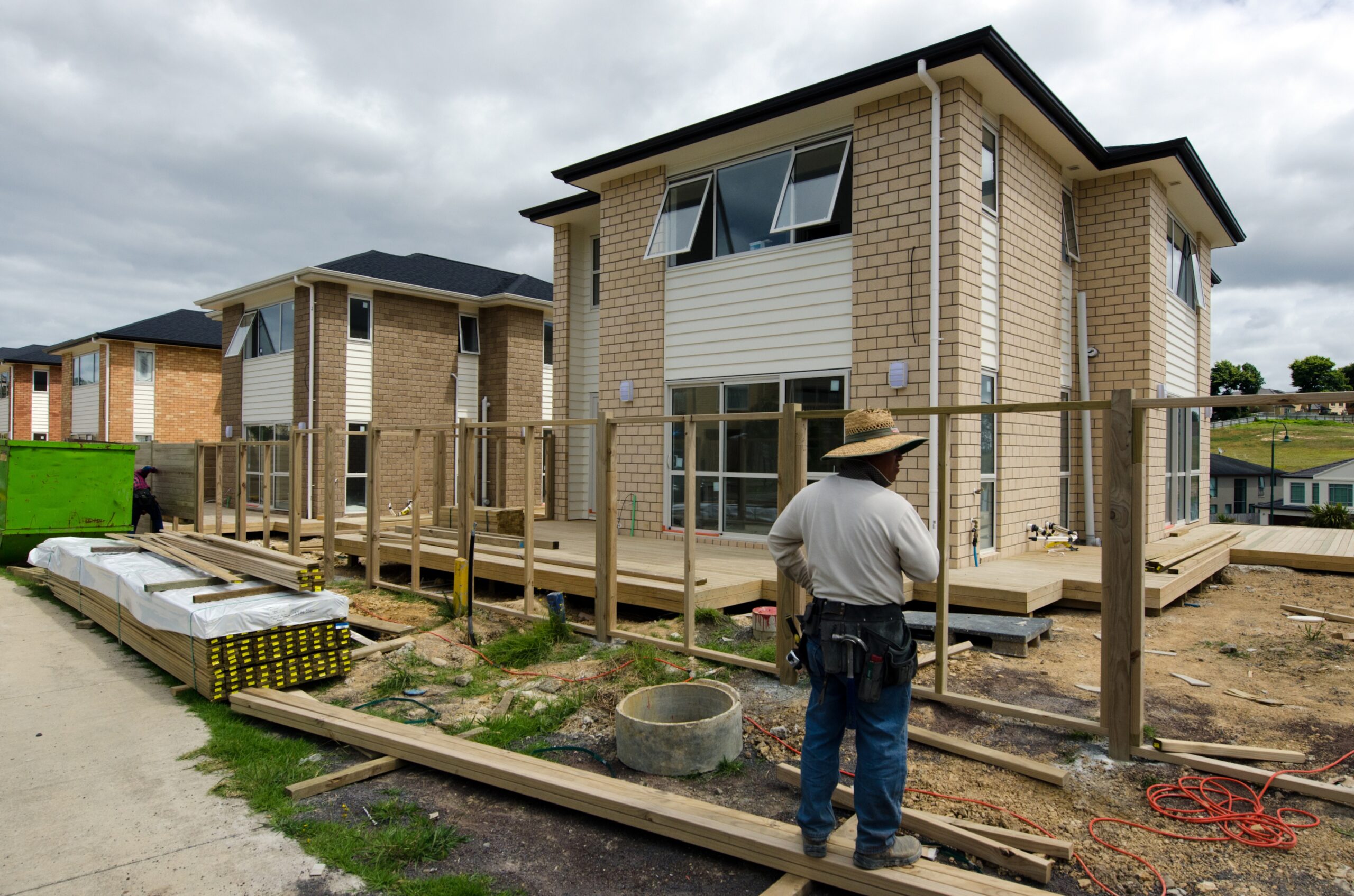
Council economists forecast a bigger share of new homes would be built within 10km of the city centre.
Auckland could gain about 38,000 more homes over the next decade if the council’s revised housing rules are adopted, according to new modelling from its Chief Economist Unit.
The unit’s paper, released on 13 October, forecasts about 143,000 new homes over 10 years under the revised Plan Change 120, against 105,000 under the current Auckland Unitary Plan.
The forecast comes from the council’s Auckland Housing Supply Model, which tracks how homebuilding responded to the current plan’s rules between 2017 and 2024.
“Auckland now has nearly a decade of evidence under the Auckland Unitary Plan. That experience helps us better understand how housing supply may respond to future planning changes,” Auckland Council chief economist Gary Blick said.
The revised plan change puts its extra housing capacity around the city centre, larger centres, rapid transit stations and frequent bus routes within 10km of the city centre.
“The proposal would enable more homes in locations that are already well connected to employment, services and public transport. That gives more people the opportunity to live close to the places they need to go every day,” Blick said.
About 32 per cent of new homes would be built within 10km of the city centre under the revised rules, up from 22 per cent under the current plan.
Beyond that line, building heights around metropolitan centres and rapid transit stations would generally be limited to the six storeys the Government requires.
Extra housing first proposed around smaller local centres and along most frequent bus routes beyond 10km has been dropped, though most town centres keep some.
The council revised the plan change in July after the Government cut the housing capacity Auckland must provide to about 1.4 million homes.
Blick said the model was useful because it moved the debate from theoretical building capacity to the number of homes likely to be built under each option.
It forecasts an average of 14,300 new homes a year under the revised rules, up from 10,500.
“When housing supply can respond more readily to demand, it helps reduce upward pressure on house prices. Our estimates suggest prices could be around 3 to 5 per cent lower than they otherwise would be,” Blick said.
The paper says that does not necessarily mean house prices would fall.
Blick said the gains could reach beyond housing.
“The location of housing matters. Enabling more homes in accessible locations can improve connections between workers, jobs and services, supporting productivity and making better use of existing infrastructure,” he said.
The paper estimates Auckland’s annual GDP would be 0.2 to 0.5 per cent higher within 10 years, worth roughly $400 million to $800 million a year in today’s prices.
The authors say they are more confident about the direction of the change than its size, with their forecast of extra homes ranging from about 29,000 to 48,000.
Public submissions on the revised plan change closed on 24 September and will now go before an Independent Hearings Panel.
The council expects to make final decisions on Plan Change 120 in mid-2027.

