

The Board told Auckland Transport to come back with something cheaper, and one member dissented
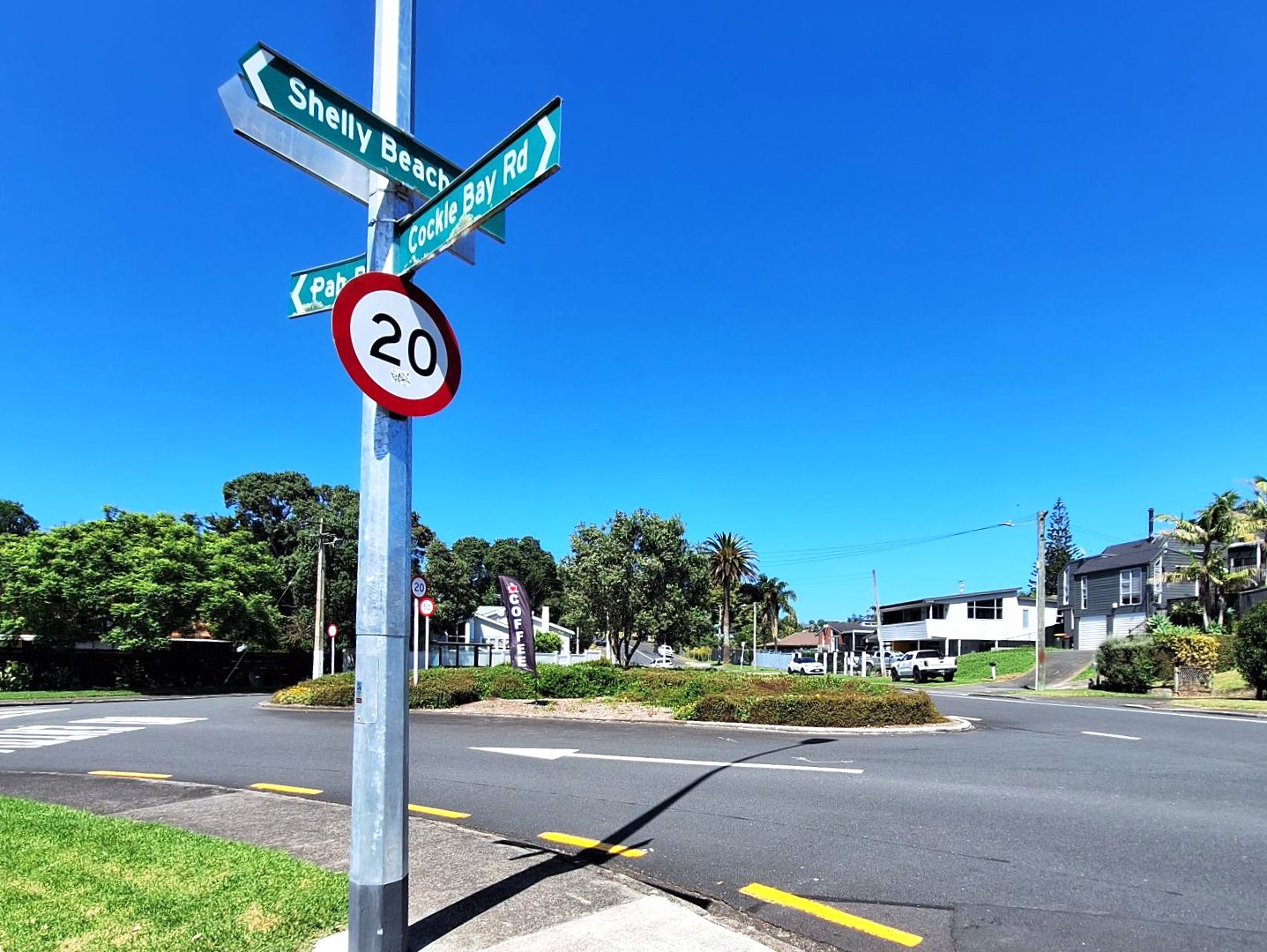
The Howick Local Board has rejected Auckland Transport’s safety plan at the intersection of Cockle Bay Road with Shelly Beach Parade, and told the agency to come back with something cheaper.
“It’s a lot of money to achieve very little in my view,” Member John Spiller told the Board.
The Board resolved on 25 June that it did “not support the proposal option” and wanted Auckland Transport to engage on it with the Cockle Bay Residents and Ratepayers Association.
Chairperson Bruce Kendall put it to a show of hands after asking the agency to revisit the work and return with something “more cost effective and less impactful”.
Three members spoke against the plan during the debate, and one spoke for it.
Auckland Transport had proposed pedestrian refuge islands on Cockle Bay Road and Pah Road, and a refuge and splitter island at the Churchill Road intersection.
The plan would also move a bus stop from outside 7A Pah Road to 3A Pah Road, remove a tree, add kerb ramps, tactile paving and red “slow” road markings, and remove 27 parking spaces.
Spiller said the bus stop was in the wrong place and the plan did not add up to a solution.
“It didn’t seem to be an overall plan to solve whatever the perceived issues were,” he said.
“The population is pretty static in that part of town.”
Member Adele White said she had spoken to residents individually at a meeting of their association.
“They didn’t seem to like any components of the plan whatsoever,” she said.
“So I think if we do anything we need to start the whole thing again.”
White said she had suggested Auckland Transport consult the association in the first place.
“They are fairly opinionated and very aware of what goes on in that area,” she said.
Deputy Chairperson Kai Zeng said the need was real but the answer was not.
“There is an identified pedestrian need but the solution presented doesn’t necessarily solve that problem,” he said.
Member Damian Light was the only member to argue for the plan, and asked that his dissenting vote be recorded when the resolution carried.
“My view on this thing is that there’s clear demand, clear safety issues, and there’s definitely risk to people in the area, and I think we should do it,” he said.
“I appreciate that the communication was largely negative, but I still think it’s the right thing to do.”
Light asked whether a pedestrian count had been done for the project.
Auckland Transport’s Lorna Stewart said it had, and that it showed “notable demand”.
Light said cheaper alternatives would not fix the underlying problem.
“It may address speed for a while, but it’s not really gonna solve the pedestrian problem,” he said.
Two-thirds of the people who made submissions had opposed the plan.
Of 48 submissions, 33 opposed it, 14 supported it and one was unclear.
The most common objection was cost and value for money, raised by 47.9 per cent of submitters.
Another 43.8 per cent said speeding was the real problem at the intersection, and 39.6 per cent objected to the loss of parking.
Stewart told the Board the residents and ratepayers association had put in official feedback.
“They didn’t consider the usage and accident volumes justified the expenditure,” she said.
The association said on its website that Auckland Transport put the cost at $250,000 without a detailed breakdown, recorded two accidents at the location in five years, and counted small numbers of pedestrians crossing at the four road locations in peak hour.
“There had been no assessment on the impact of the loss of 27 parking spaces,” it said.
Stewart warned the Board against walking away entirely.
“Taking no further action doesn’t really address any of the safety issues which have been identified,” she said.
She suggested a scaled-back version, keeping a pedestrian refuge on Cockle Bay Road but leaving the bus stop where it is.
Auckland Transport is to return to the Board with revised options, and to approach the association directly.

