


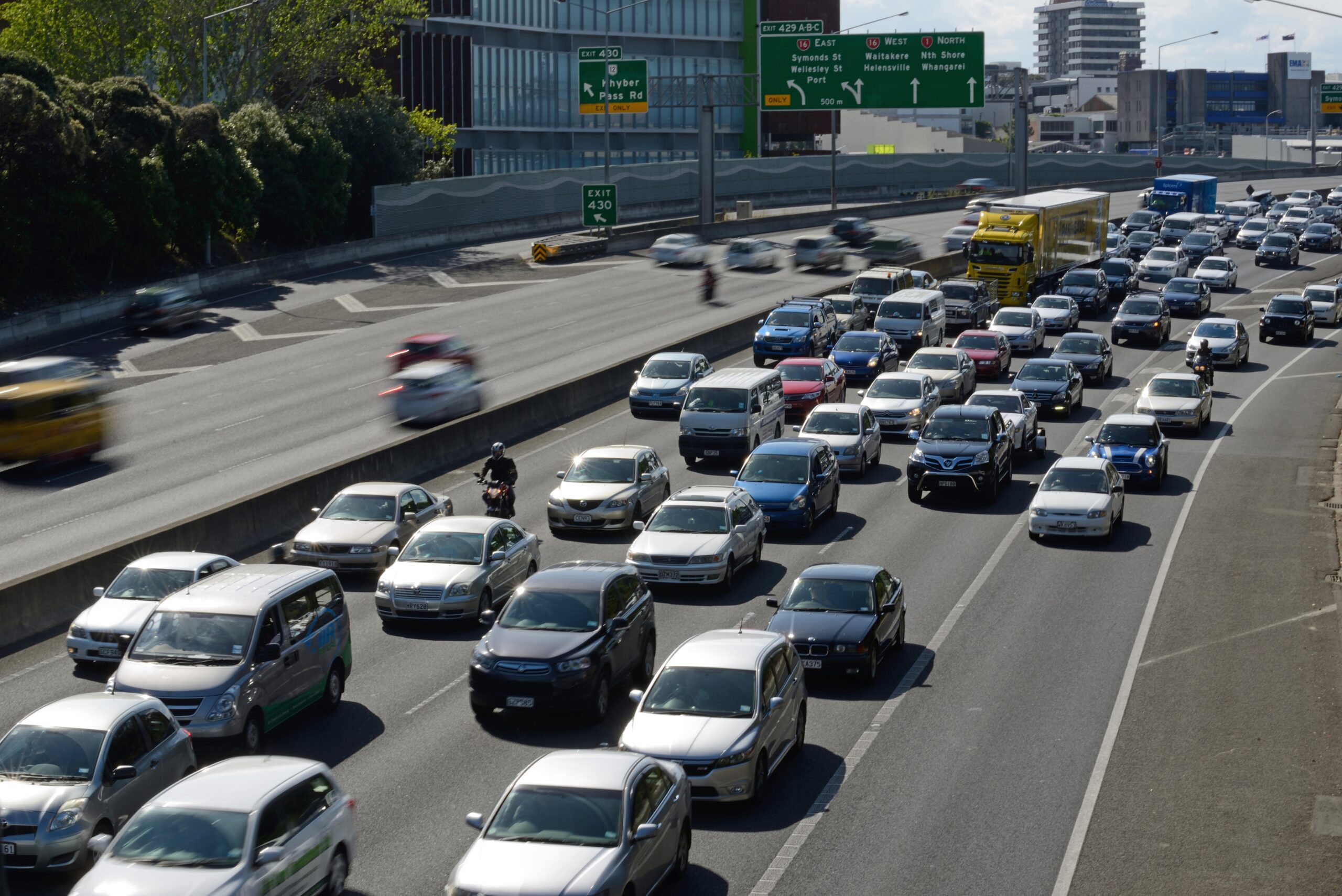
The Board calls time-of-use charging “a financial penalty” for local commuters, as the mayor and the government push to bring it in
The Howick Local Board has warned that time-of-use road charging would hit Howick commuters hard, in a submission that runs against the mayor and the government’s push to introduce it.
The Board said that in Howick, with “long commuter corridors, patchy public transport coverage, limited rail access, and a lack of park-and-ride options,” charging “becomes a financial penalty, not a behaviour change incentive” if introduced before alternatives exist.
It said the proposed $70 fee for non-payment “will be a deterrent,” but that “with the current cost of living and fuel crises this is a lot of money, particularly as rates will also be rising substantially.”
The Board also warned that charging could push traffic into residential streets, and recommended that any revenue raised in a region be reinvested in that region’s transport.
The submission responds to proposed national regulations for time-of-use charging schemes.
The government passed the enabling law, the Land Transport Management (Time of Use Charging) Amendment Act, in 2025, and it comes into force on 18 November 2026.
Auckland is expected to be the first place a scheme is designed.
Both the mayor and the responsible minister want it, arguing it would get Auckland moving and lift productivity.
Auckland mayor Wayne Brown, who released a report putting the cost of the city’s congestion at $2.6 billion a year by 2026, said the status quo was not good enough.
“Right now Aucklanders are not moving at peak time on our motorways and city centre,” Brown said. “If anything, it resembles a carpark.”
He said a time-of-use charge would “enable people to think of other ways to travel, like public transport, carpooling or driving outside rush hour”, and that “reducing Auckland’s congestion will mean that truckies can deliver more freight on less trucks, and tradies can spend more time on the job, rather than sitting in traffic”.
Transport Minister Chris Bishop, who steered the enabling law through Parliament, said “sitting in traffic wastes time, costs money, and drags down productivity”.
He called time-of-use charging “a common-sense tool that encourages people to travel at off-peak times or by other modes”, from “a parent on the school run” to “a truckie delivering exports to port”.
Bishop said travel times in New Zealand’s major cities were “up to 30 per cent longer than in comparable Australian cities”, and that the Government would partner with Auckland Council first “given the importance of Auckland to the national economy”.
The Board adopted its submission on 28 May. A joint feasibility study by Auckland Council and the New Zealand Transport Agency, with public consultation, is expected from the middle of 2026.

